Halaex: one workforce platform, four products, built for the UAE
A UAE workforce platform for hiring consultants and freelancers, employing staff through EOR, outsourcing teams and setting up a business. I owned the design end to end, from research to launch.
- Year
- 2026
- Role
- Product Designer, end to end
- Platform
- Web app + website
- Status
- Live

Overview
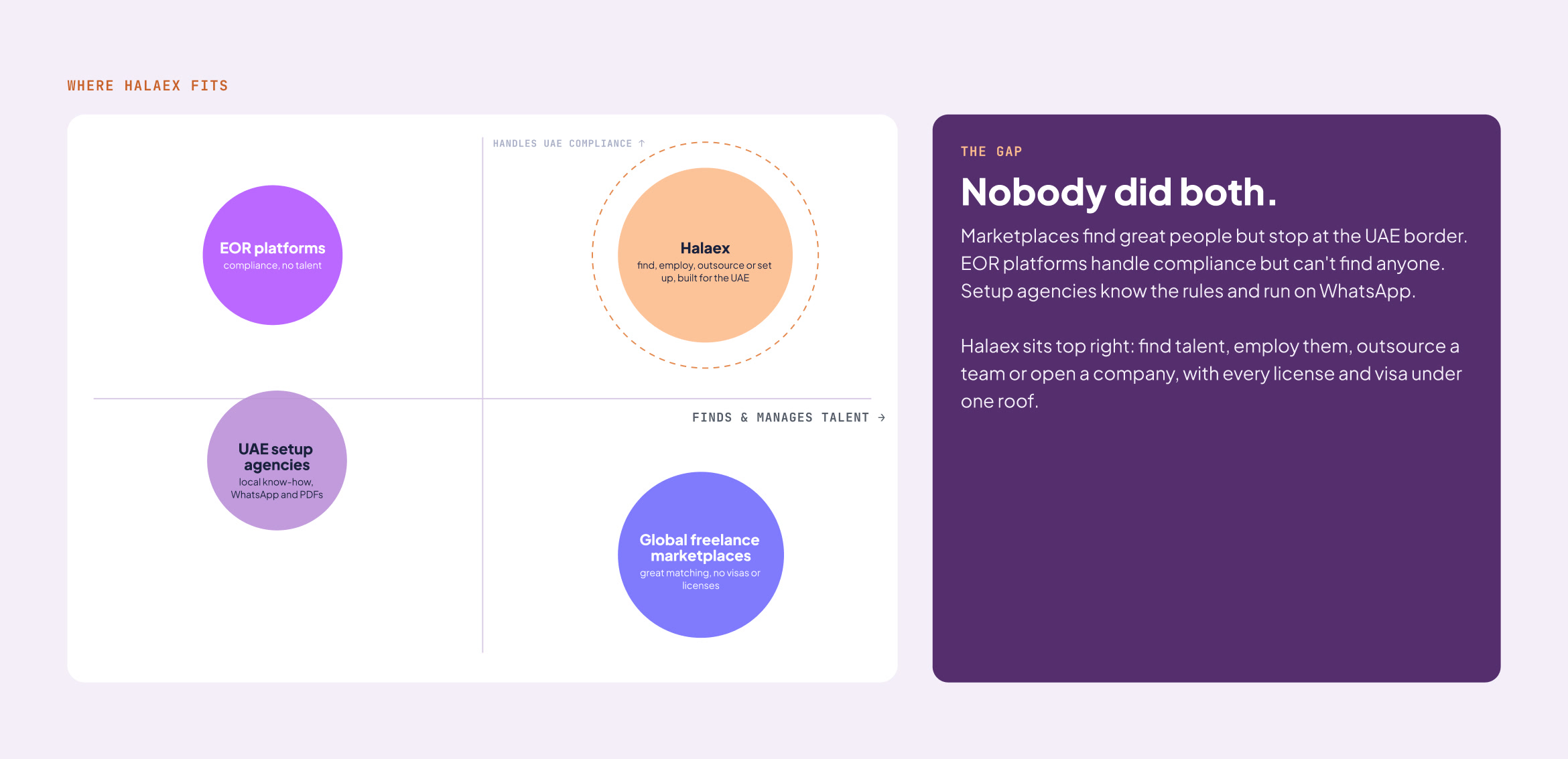
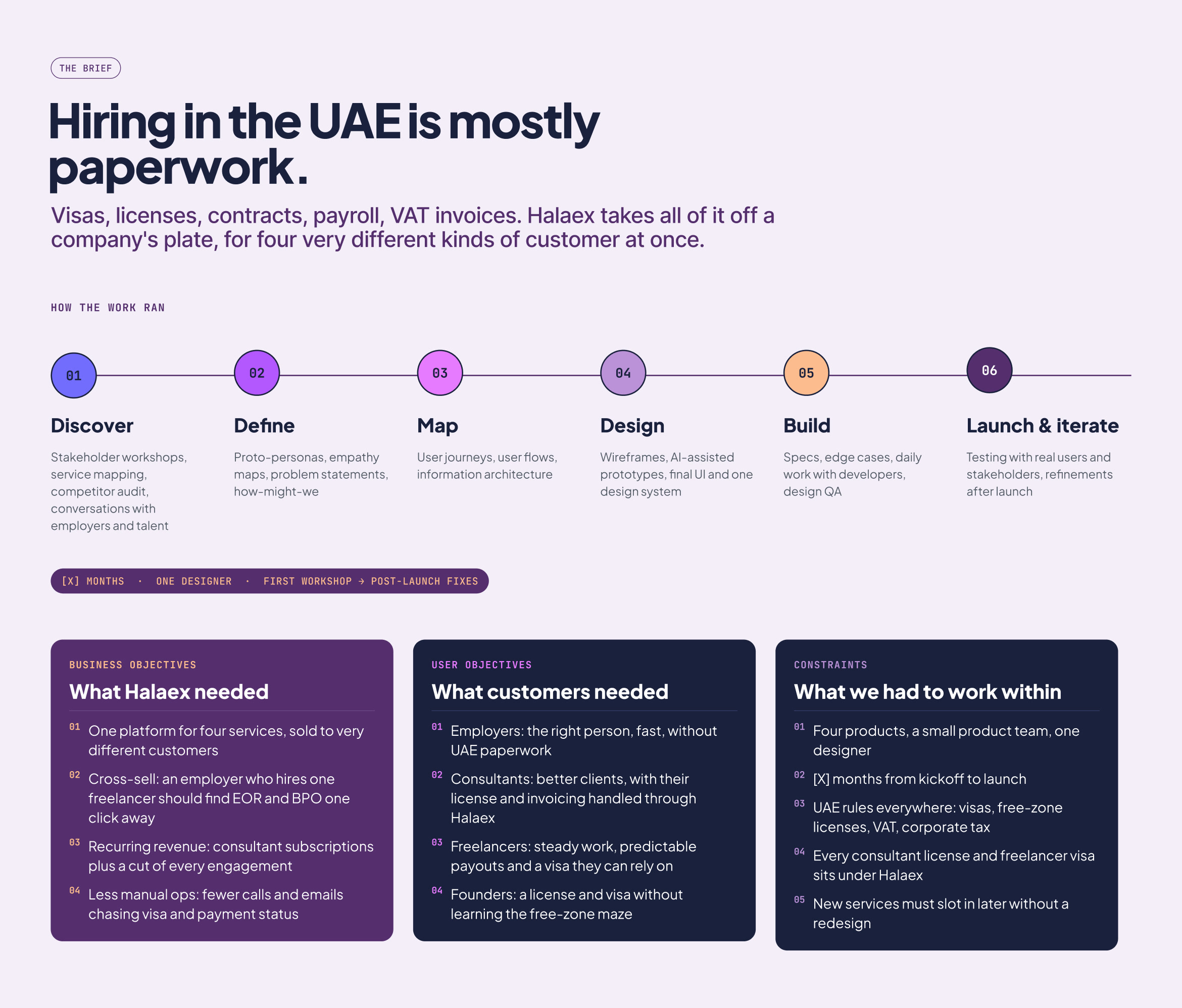
Hiring in the UAE is mostly paperwork. Visas, licenses, contracts, payroll, VAT invoices. Halaex takes all of that off a company's plate, and it does it for very different kinds of customers at once.
I was the only designer on it for [X] months: research, information architecture, flows, prototypes, final UI, working side by side with the developers, then testing and refining after launch.
The problem
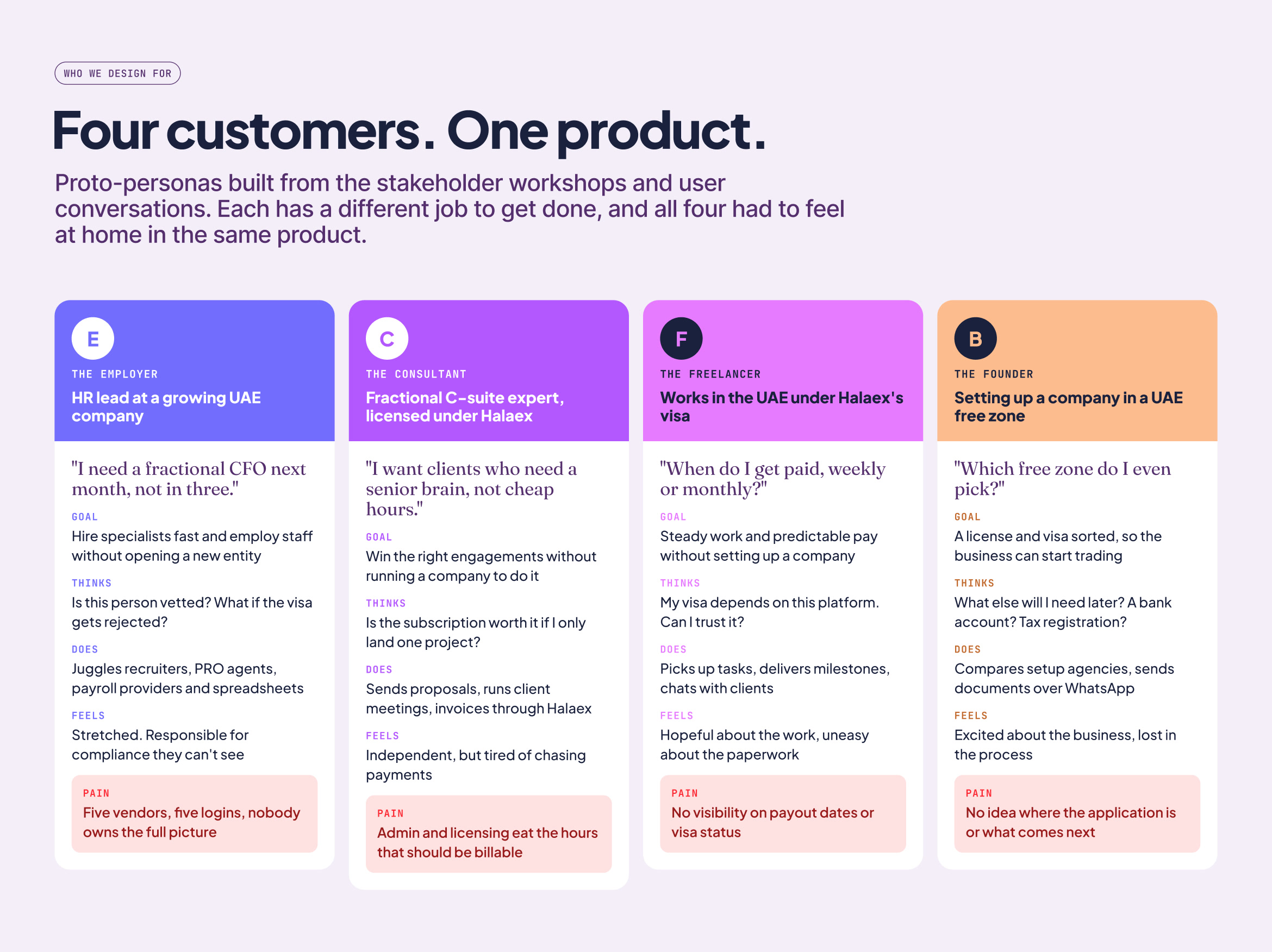
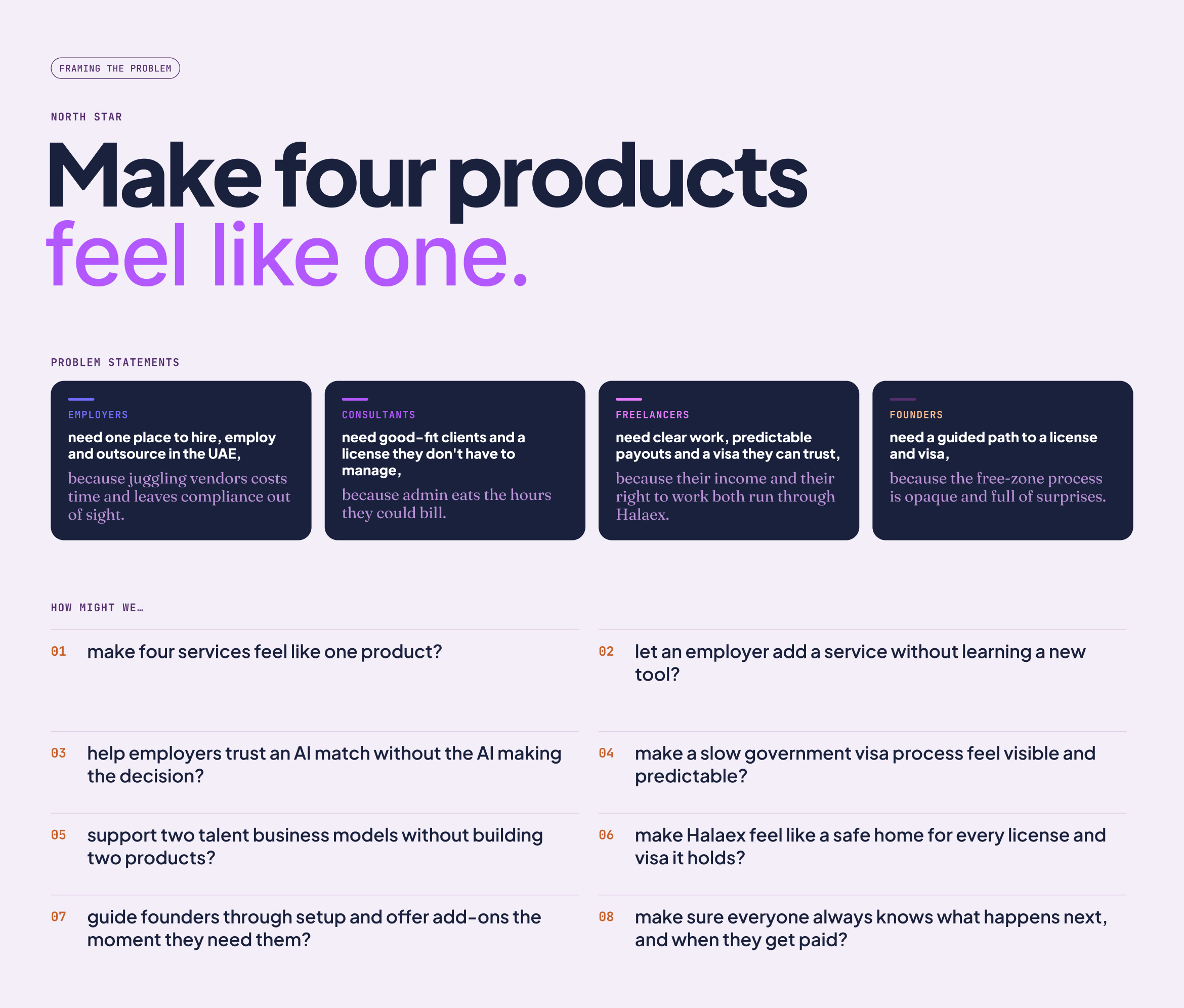
Halaex isn't one product. It's four, sold to people who barely overlap.
A company might want to hire a fractional CFO for two days a week, employ a full-time developer without opening a UAE entity, or hand an entire back-office process to an outsourced team. On the other side are consultants who hold a free-zone license arranged through Halaex, freelancers who work under Halaex's visa and get paid weekly or monthly, and founders who just want a company license and a visa sorted.
The easy route was four separate tools. The risk was that it would feel exactly like that.
Process
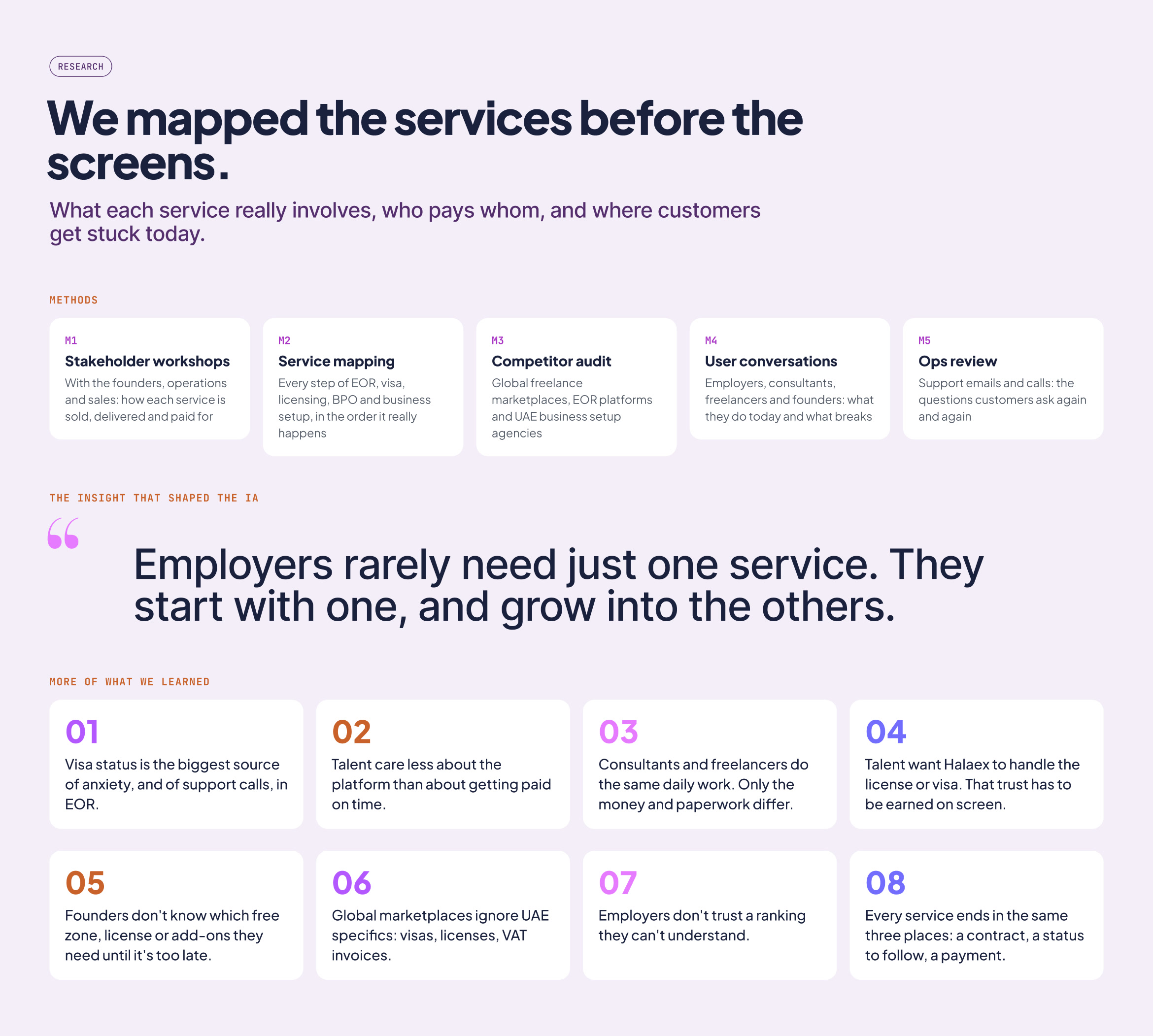
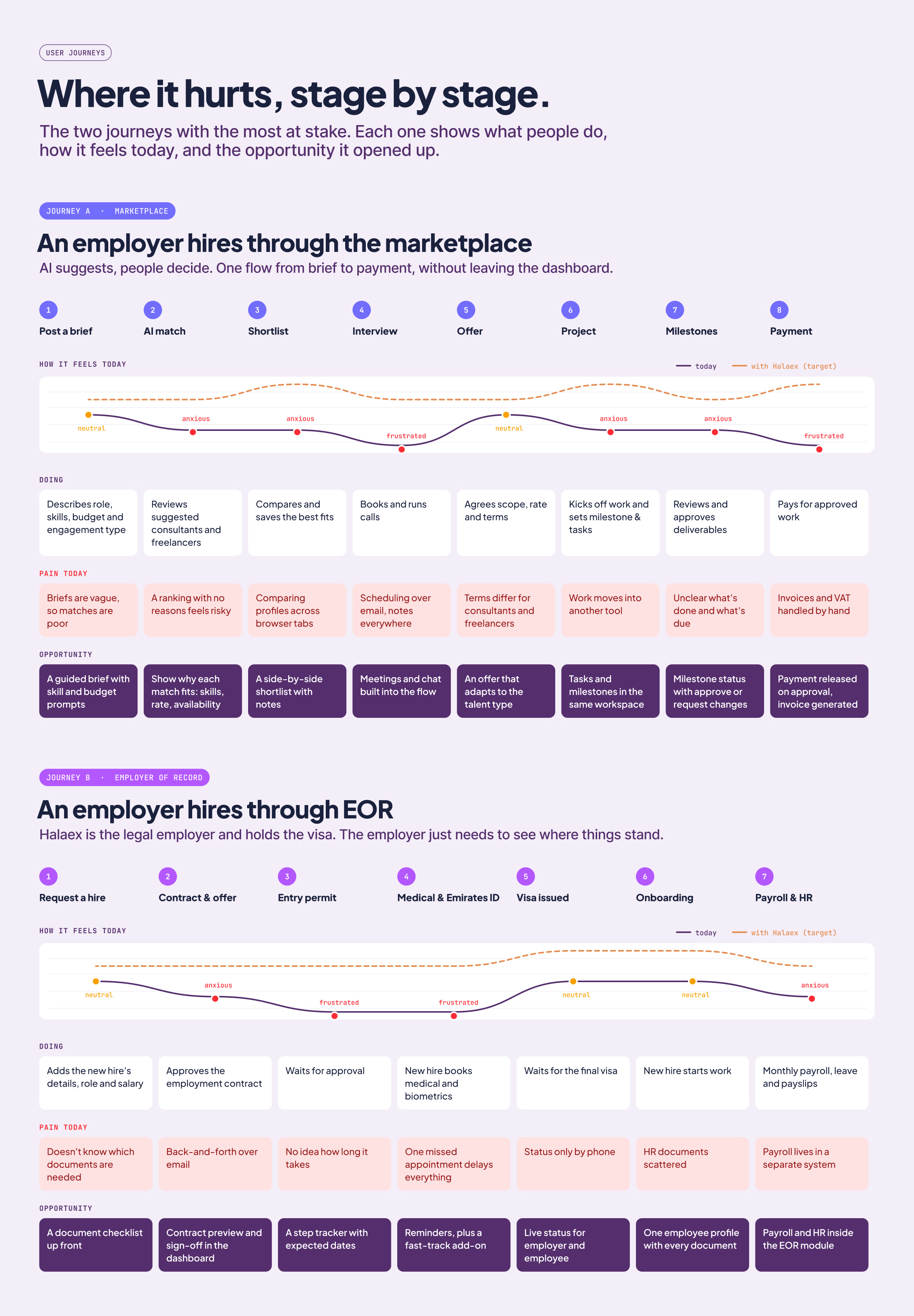
I started with the services, not the screens. With the Halaex team I mapped every journey end to end: what a company actually needs to do to hire through EOR, which visa steps happen in what order, how money moves between employer, Halaex and talent for each plan.
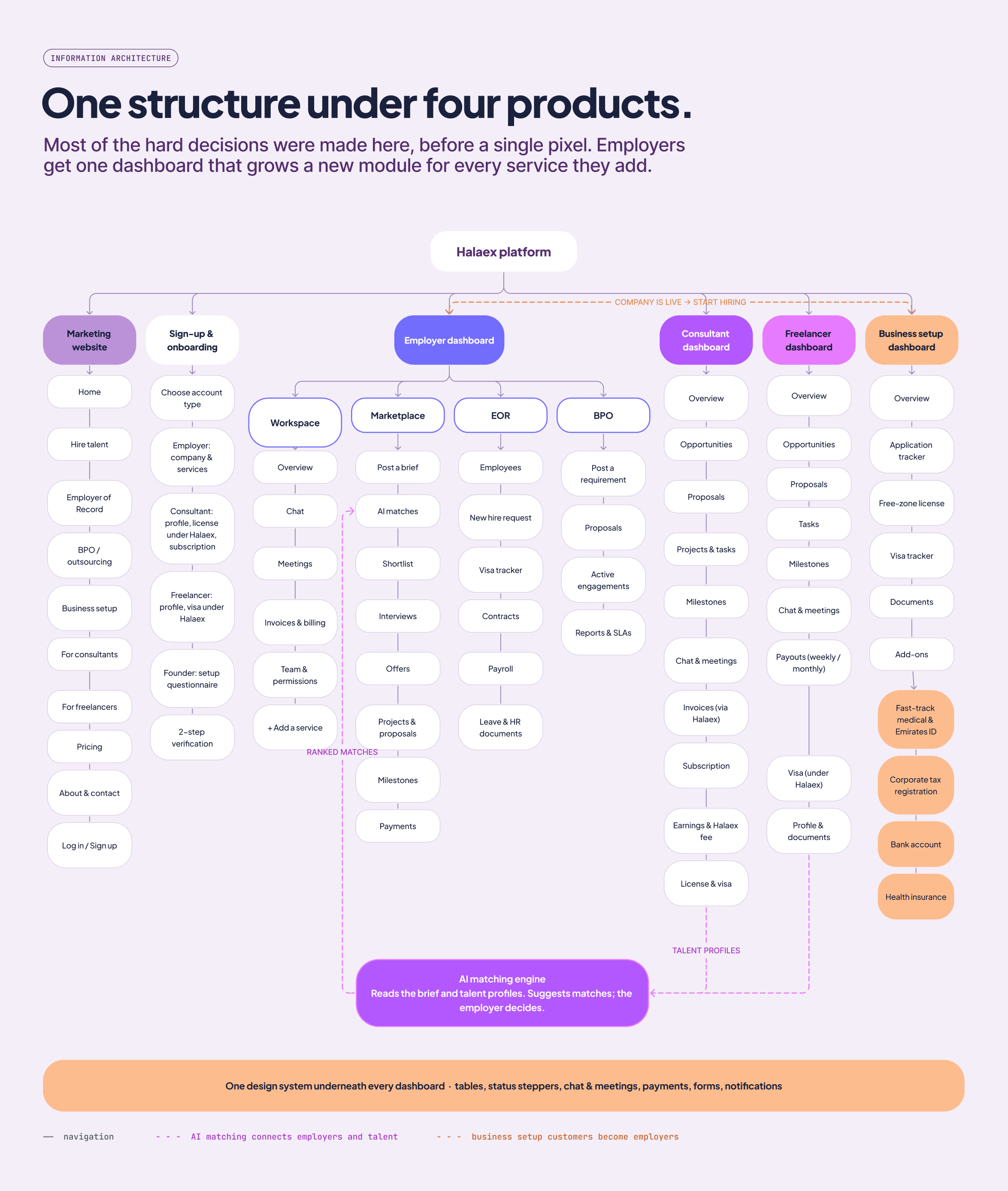
That map became the information architecture. Most of the product's hard decisions were made there, before a single pixel.
AI was part of my own workflow too: summarising research and stakeholder notes, exploring layout options and getting to clickable prototypes much faster, so more of the time went into the decisions that mattered.
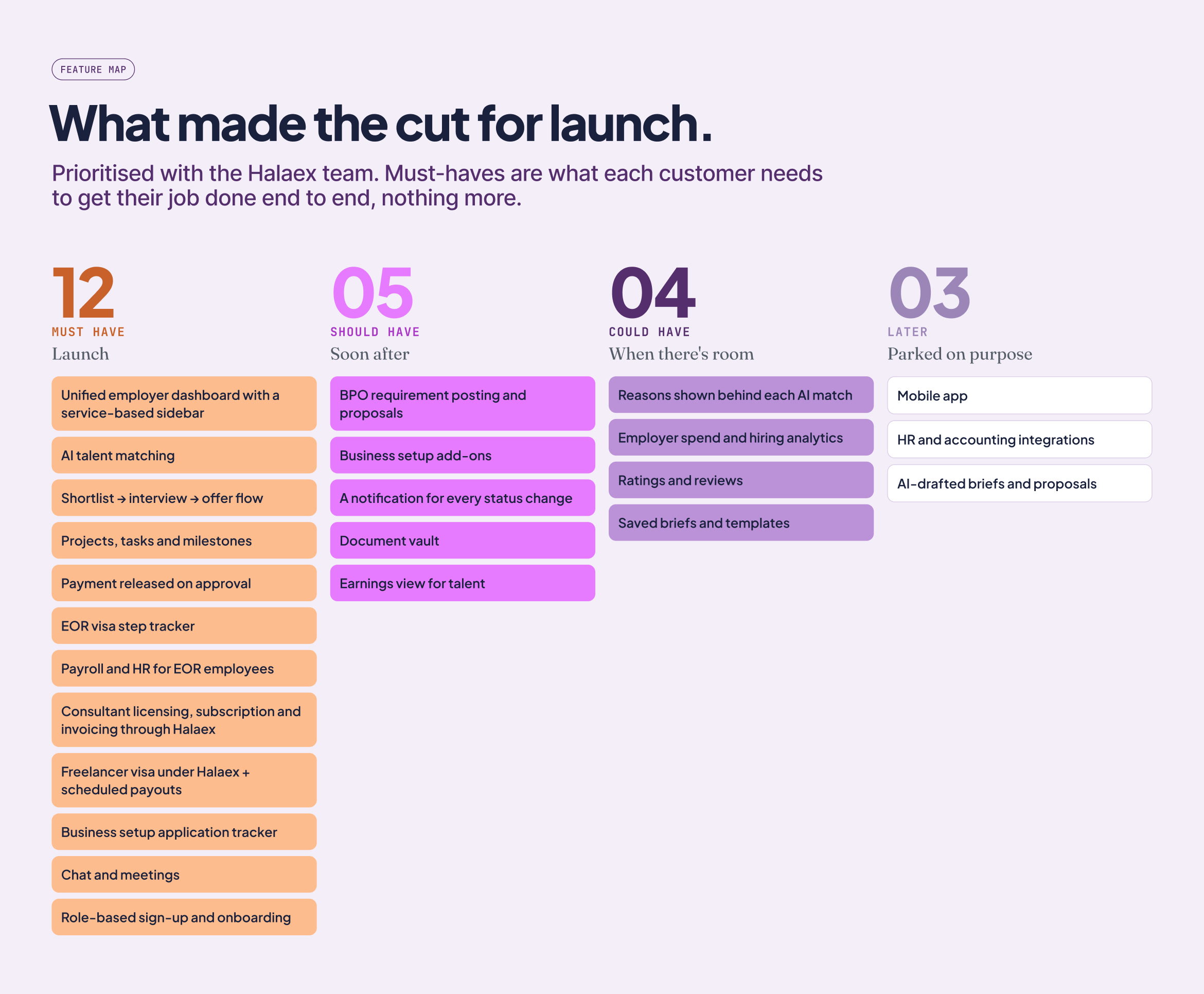
Key decisions
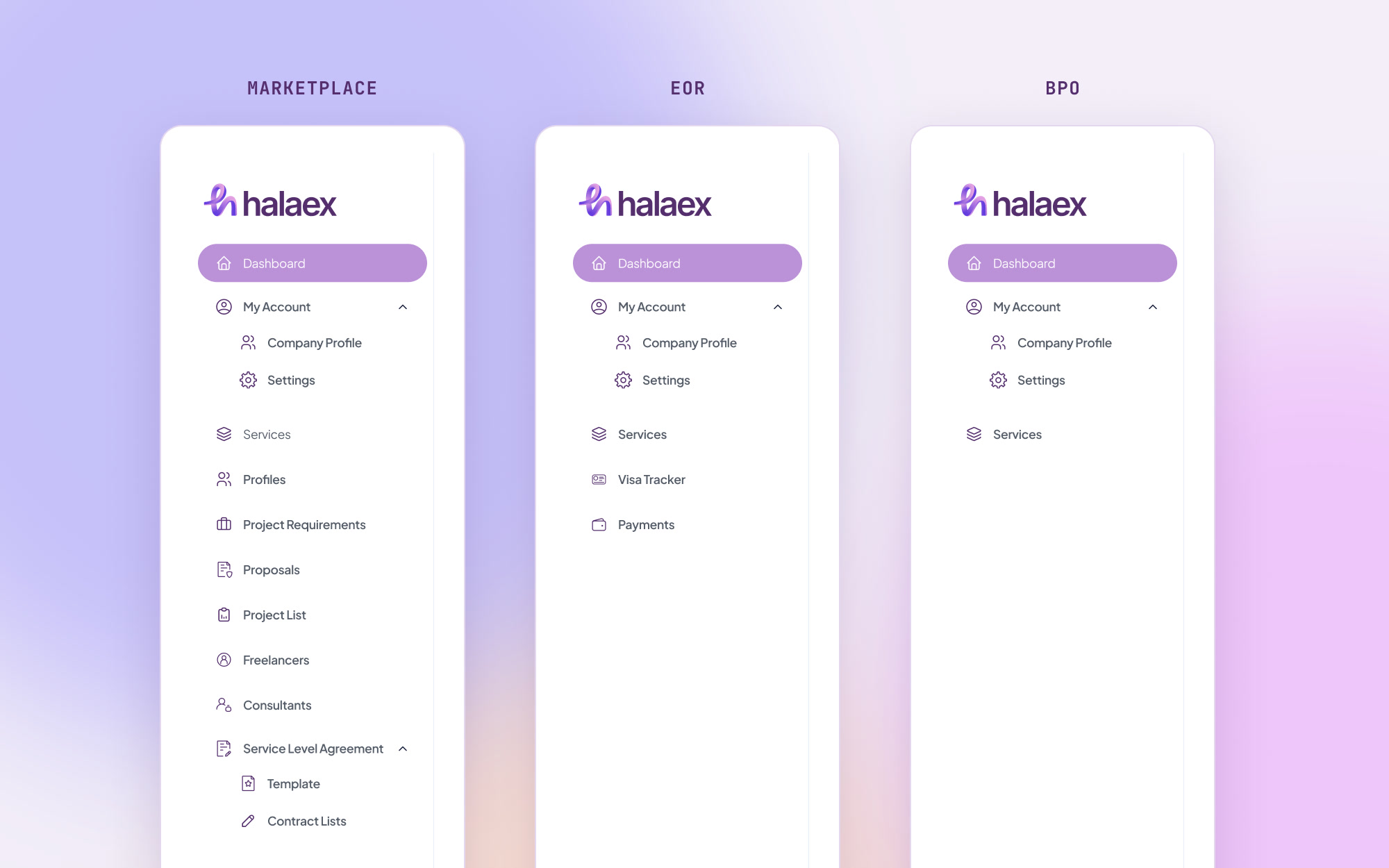
One employer dashboard that grows with them
Employers don't get three logins for three services. They get one dashboard, and the sidebar changes with the services they use: Marketplace, EOR or BPO. Someone who starts by hiring a freelancer and later employs staff through EOR never has to learn a second product.
AI does the first pass, people make the call
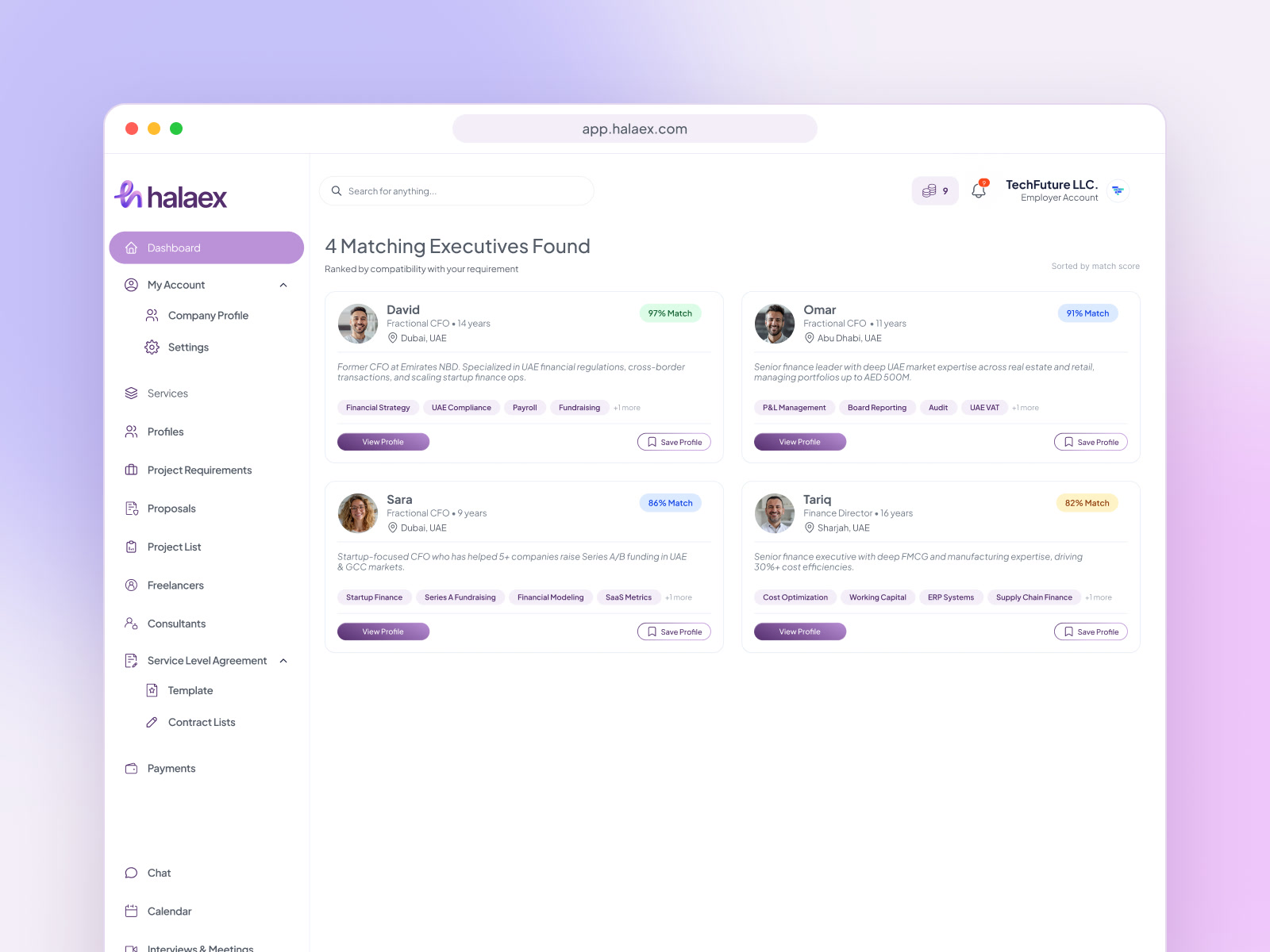
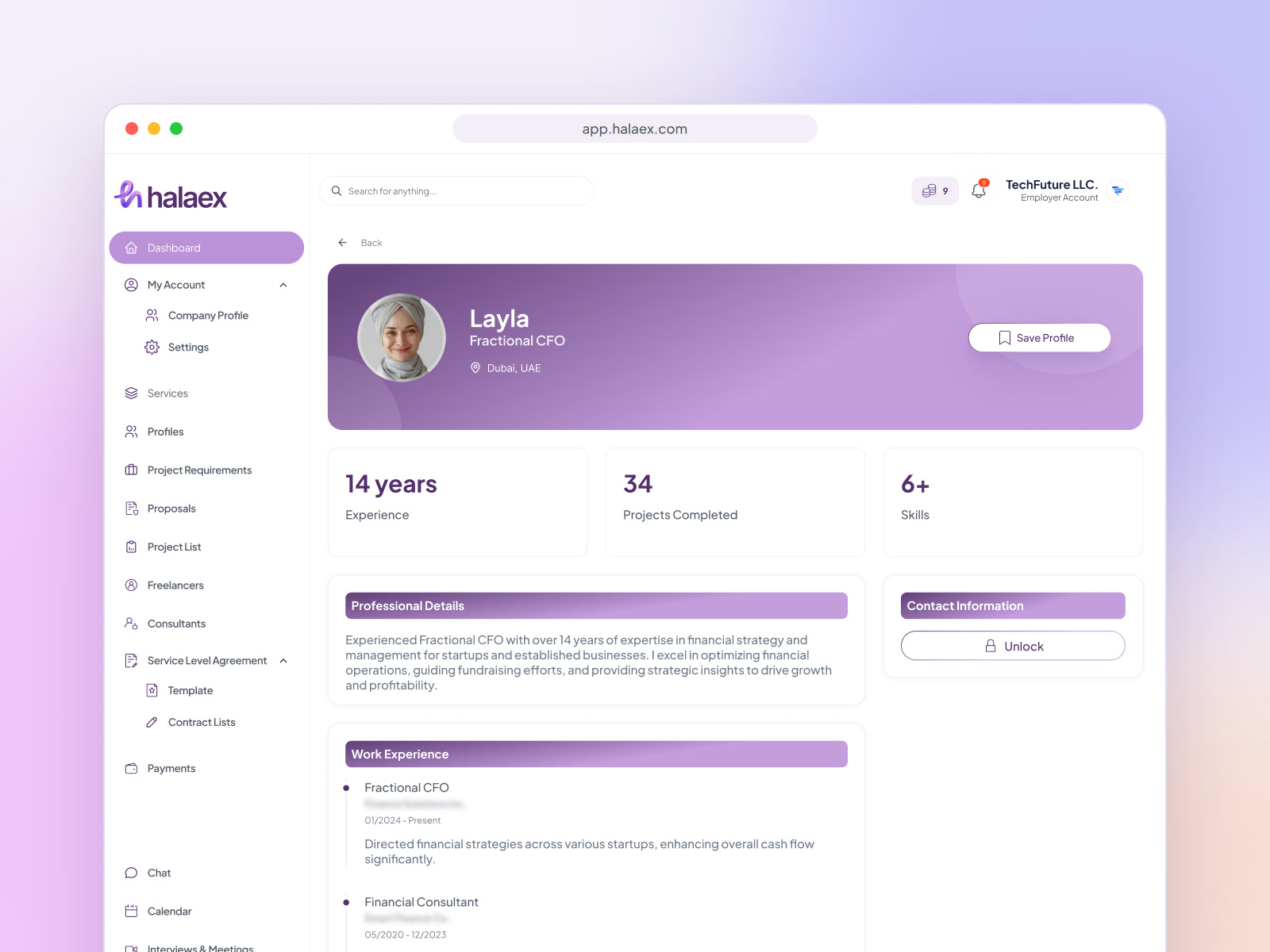
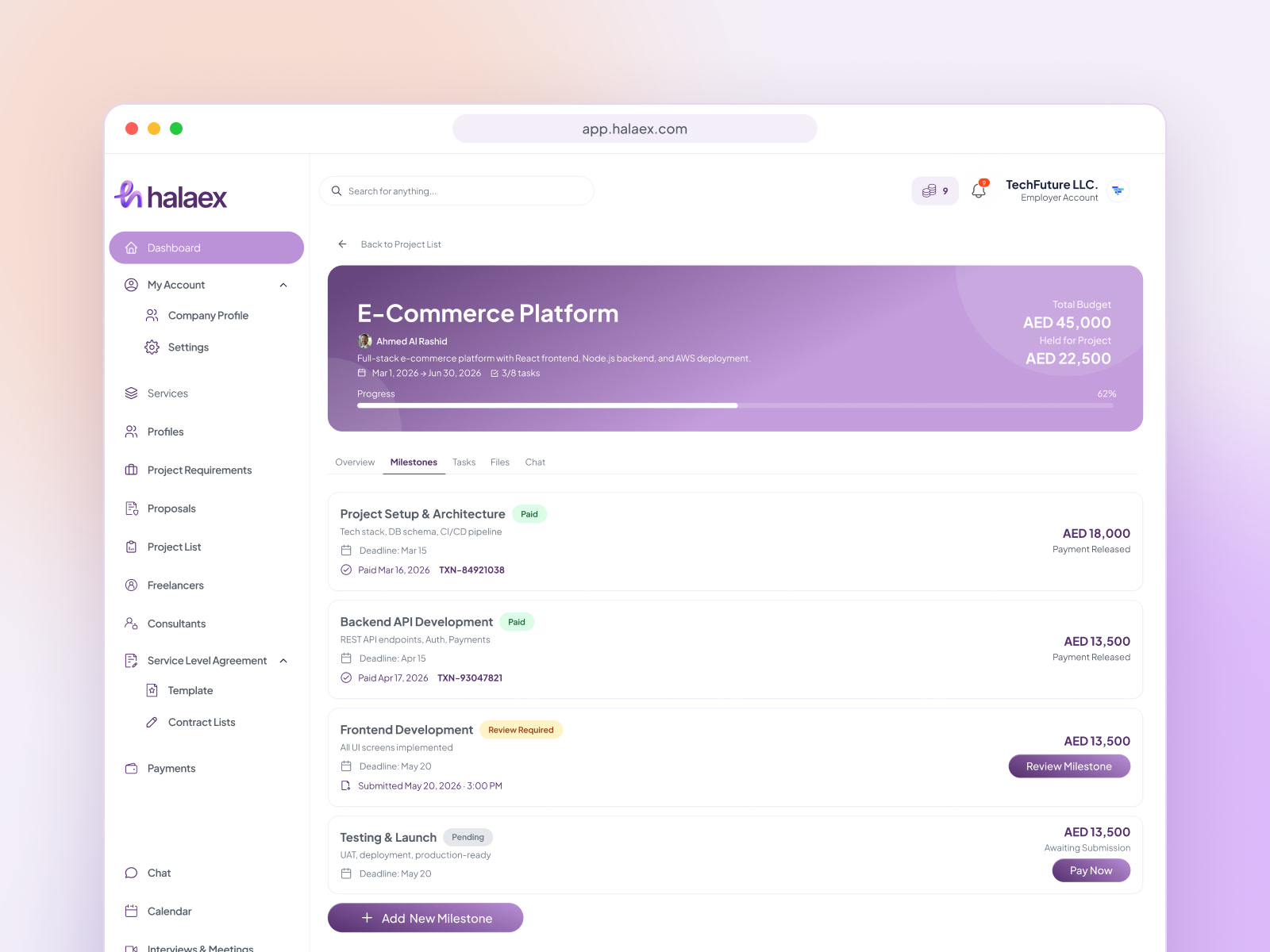
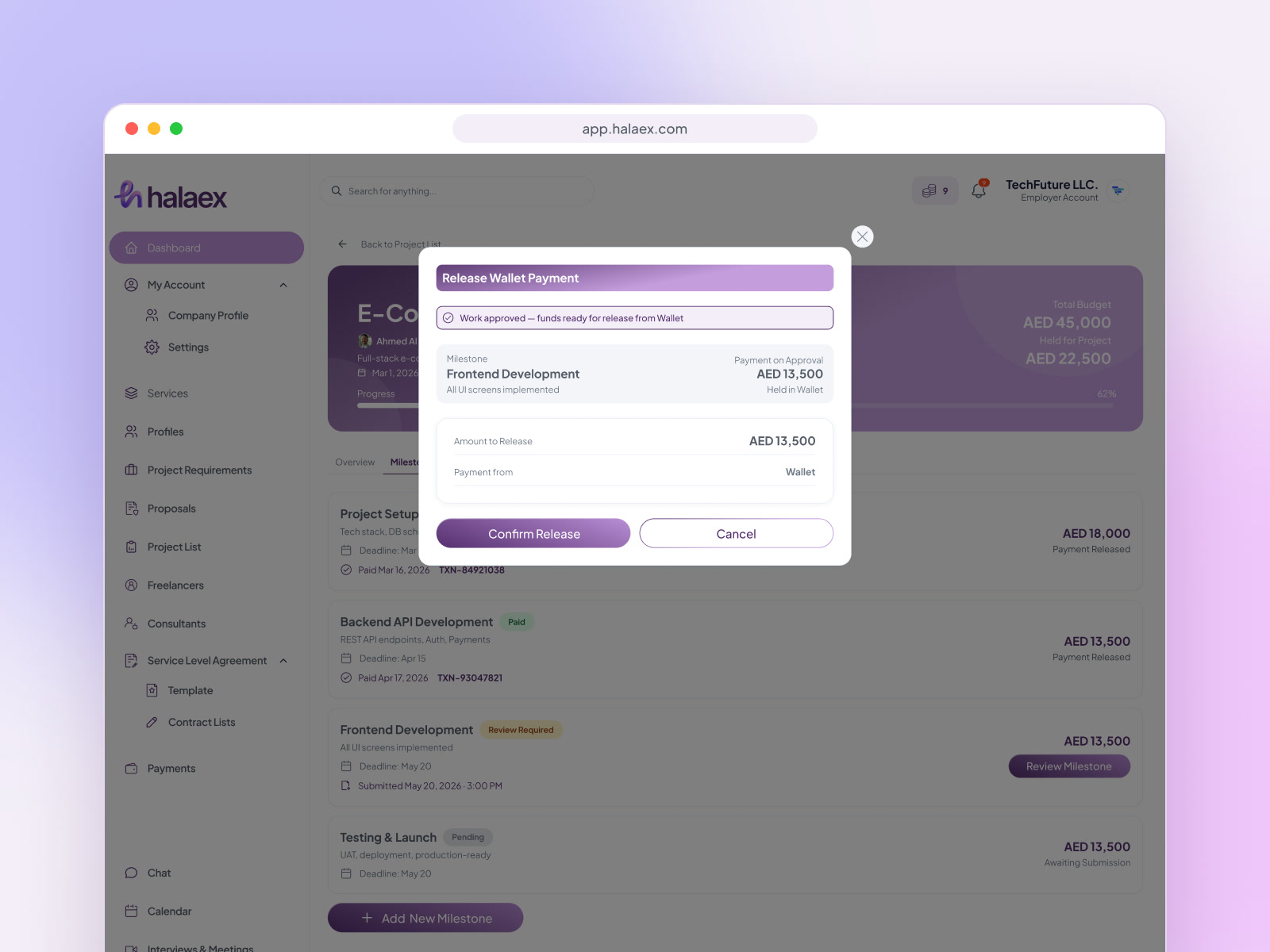
In the marketplace, AI matching suggests consultants and freelancers for each brief. Shortlisting, interviews, offers, proposals, milestones and payments all happen in the same flow, so the employer never leaves the page they started on. The AI helps people find the right talent sooner. It never decides for them.
Visa progress you can actually see
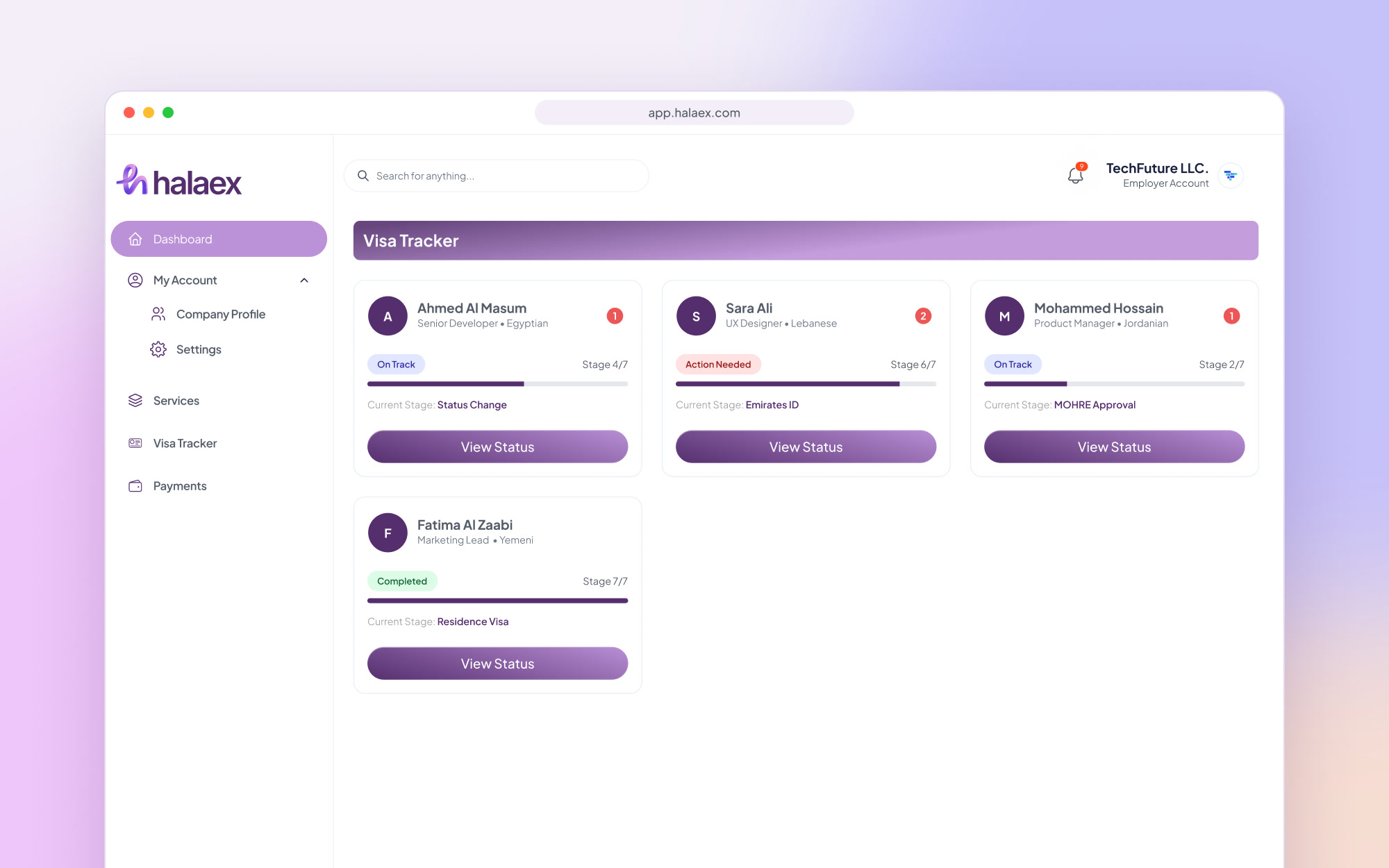
EOR is where most of the anxiety lives: "Where is my new hire's visa?" The EOR dashboard turns a long, opaque government process into clear steps with a status for each, alongside the employee's details, contract and payroll.
Same workspace, different business model
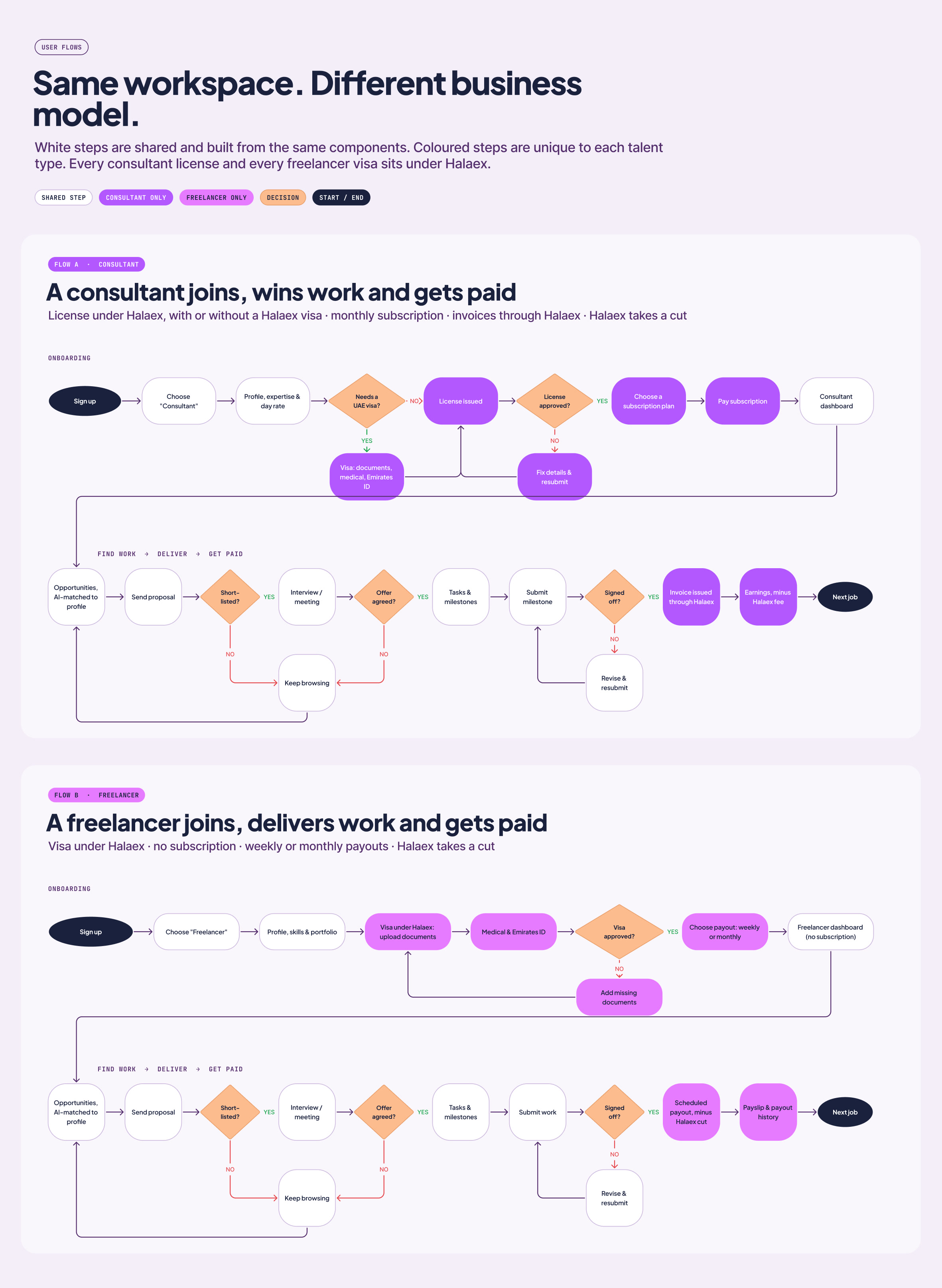
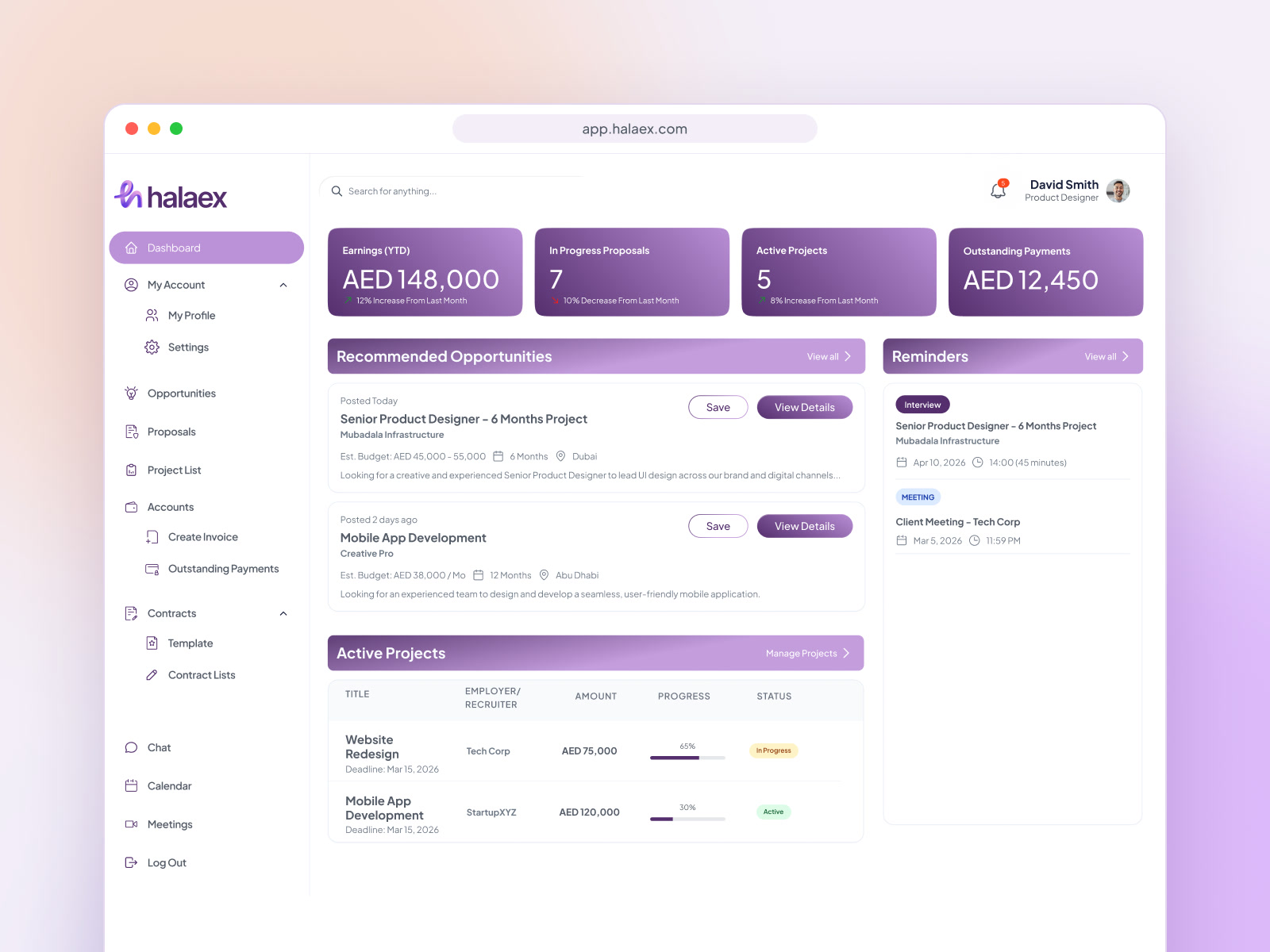
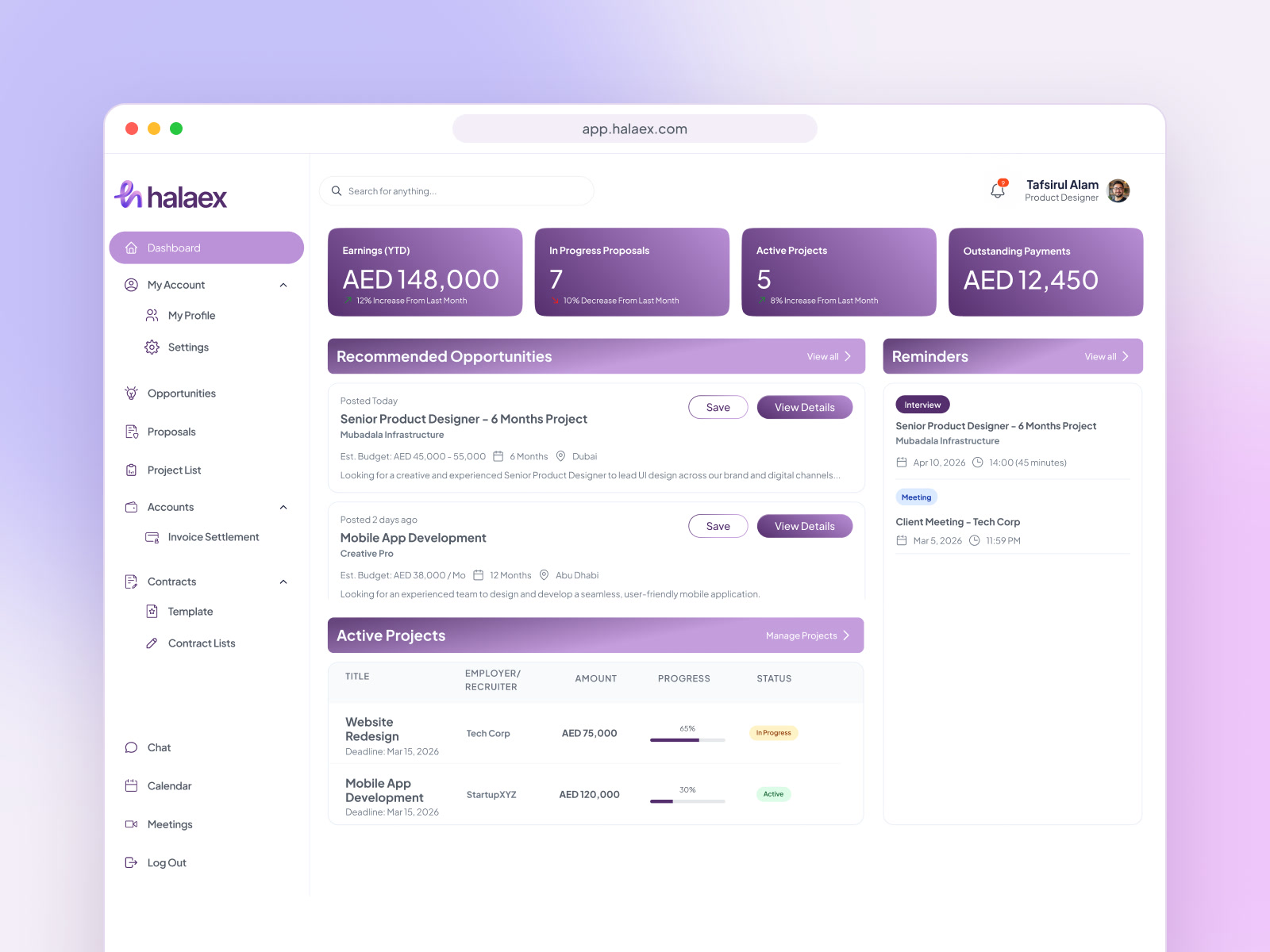
Consultants and freelancers do the same day-to-day work: find opportunities that match their expertise, send proposals, deliver tasks, complete milestones, chat and meet with clients. The money and the paperwork are what differ. Consultants get a free-zone license through Halaex's free-zone partnership, with or without a visa, invoice clients through Halaex and pay a subscription. Freelancers work under Halaex's visa, pay no subscription and get paid weekly or monthly.
So both dashboards share one core and one set of components, and only the parts about licenses, visas, invoices and payouts change.
Built for the phone, not squeezed onto it
Consultants and freelancers run a lot of their work from their phones: new opportunities, proposals, client chat with AI-suggested replies, invoices and payouts. Every talent screen has a mobile version built from the same components as desktop, so nothing feels like a cut-down copy.
Business setup, without the maze
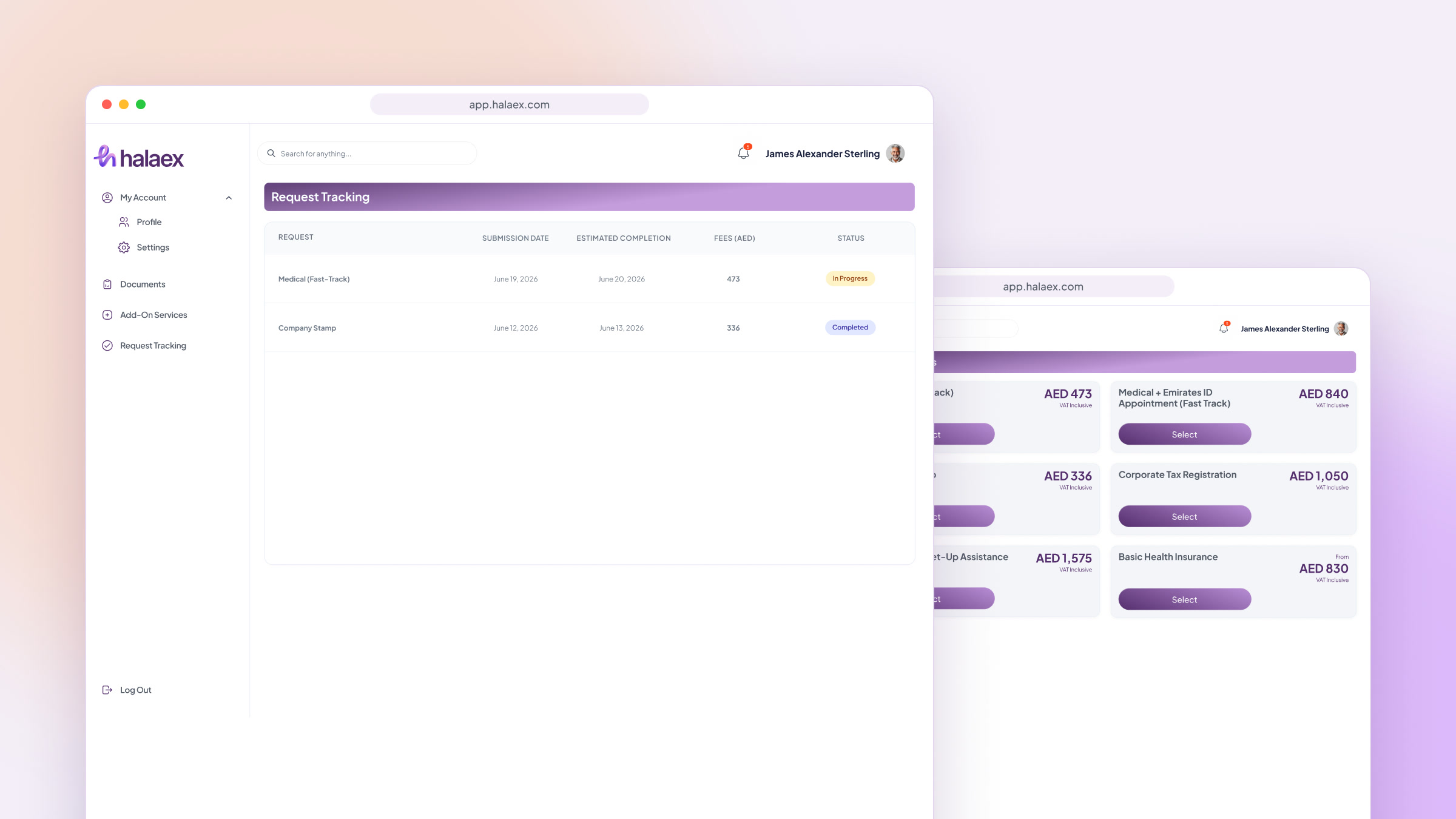
Some customers don't want to hire anyone yet. They want to open a company. The business setup dashboard takes them through the free-zone license and visa paperwork step by step, shows where their application is, and offers the extras founders usually scramble to arrange later: fast-track medical and Emirates ID, corporate tax registration, bank account help and health insurance.
Launch and after
I stayed close to the developers through the build: specs, edge cases, reviewing what went live against the design. After launch we tested the main flows with real users and stakeholders, and I fixed what got in people's way. [Name one specific change you made after launch and why.]
Outcome
[2–3 sentences: what changed for the business. For example: how quickly the first companies signed up, a service that took off, or feedback from employers.]
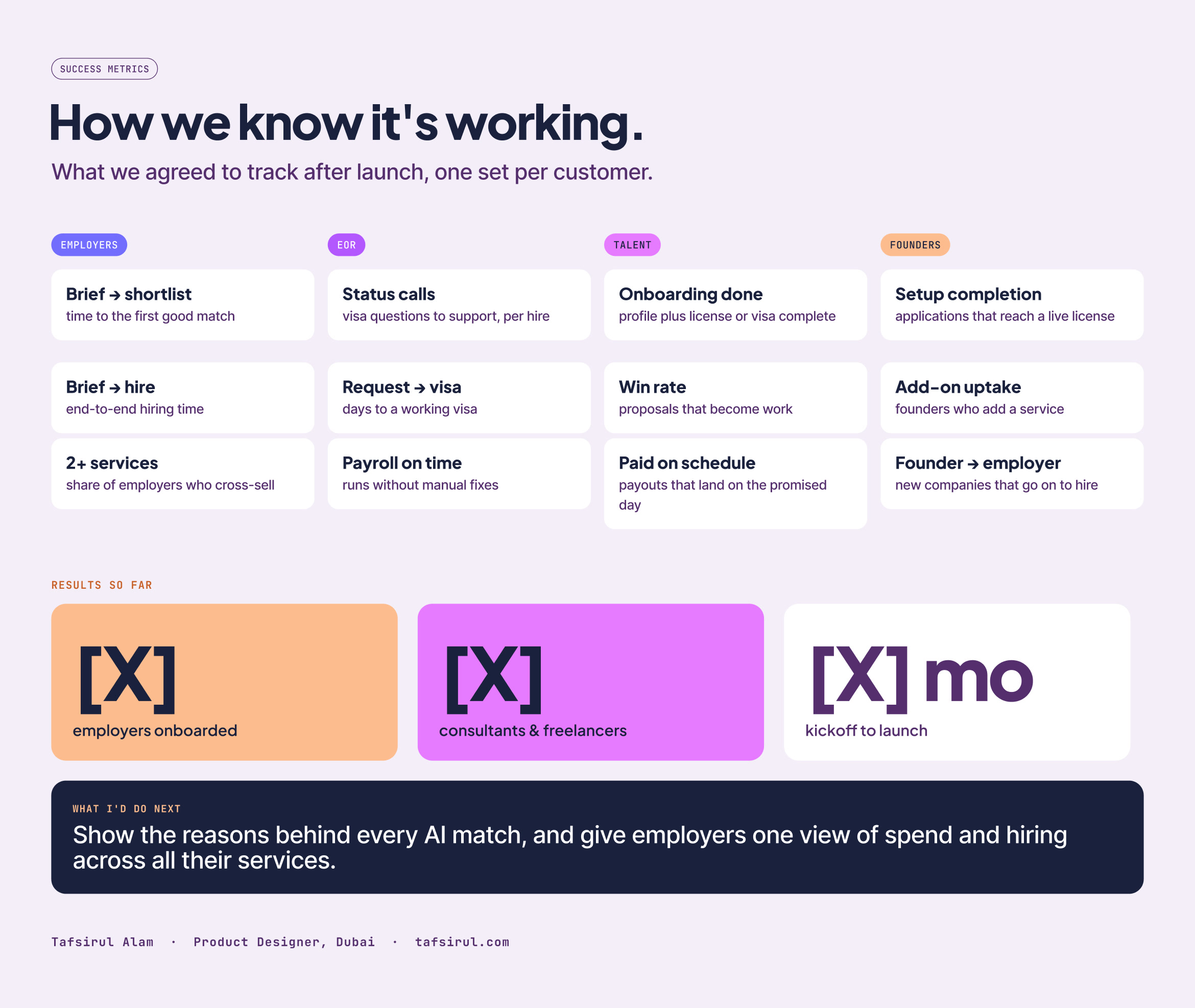
What I'd do next: show the reasons behind every AI match, and give employers one view of spend and hiring across all their services.
What's next
Working on something similar?
Let's talk.
If this project sounds close to what you need, I'd love to hear about it. I usually reply within a day.